Why Strength Training Becomes More Important as You Age
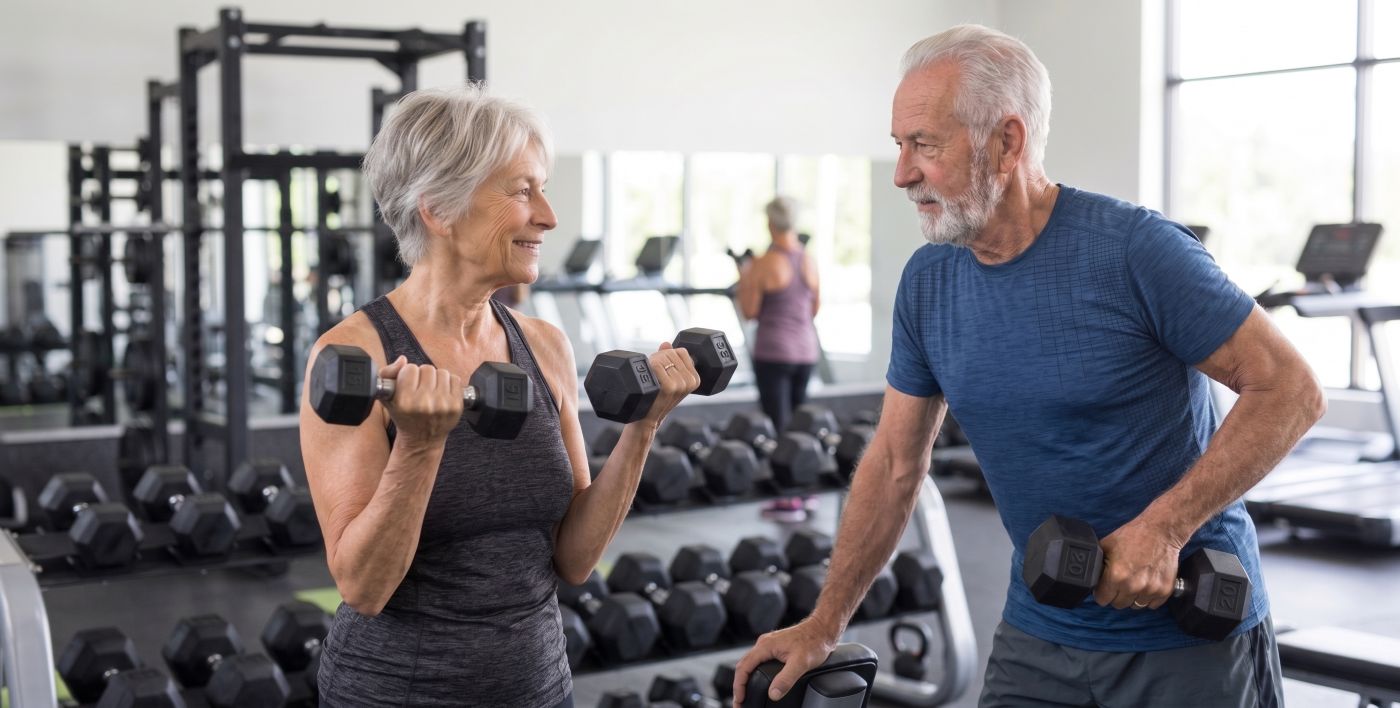
Strength training supports good health at every age, but it becomes increasingly important as we get older. From around age 50, the average person may lose approximately 1% of their strength each year. Without action, that gradual decline can eventually make everyday activities – such as climbing hills, getting out of a chair or looking after the grandchildren – much more difficult.
The good news is that regular strength training can slow, prevent and sometimes reverse age-related strength loss. Maintaining your strength can help you stay independent, continue doing the things you enjoy and enjoy a better quality of life as you age.
Main questions
- Strength Helps You Recover From Trips and Stumbles
- Benefits Beyond Stronger Muscles
- Do Older Adults Need to Lift Heavy Weights?
- Is Strength Training Safe for Older Adults?
- How Hard Should You Train?
Strength Helps You Recover From Trips and Stumbles
Trips and stumbles happen at every age. Younger people can often recover because they have enough strength to support themselves when their balance is suddenly compromised.
As strength declines, recovering from an awkward position becomes harder. For example, someone who already needs much of their available strength simply to stand up from a chair may struggle to support their body on one leg during a stumble.
Building strength does not guarantee that you will never fall, but it can improve your ability to respond when you lose your balance. It may also help you remain mobile and confident in everyday life.

Benefits Beyond Stronger Muscles
Strength training is not only about building muscle. It has also been associated with improvements in, or better management of, several common health conditions, including:
- Osteoporosis and reduced bone density
- Type 2 diabetes and other metabolic conditions
- Osteoarthritis
- Age-related loss of mobility and independence
More strength is also associated with a longer life and better physical function in later years.
1. Do Older Adults Need to Lift Heavy Weights?
Any appropriate strength training is beneficial, particularly if you are not currently doing any. Getting started is the most important step.
However, evidence increasingly suggests that improving bone strength, as well as muscle strength, requires sufficiently challenging resistance.
The word heavy is relative. It does not mean you need to lift enormous weights. It simply means using enough resistance to challenge your muscles and skeletal system. Depending on your current ability and the exercise, that resistance could come from:
- Your body weight
- Resistance bands
- Free weights
- Weight machines
- Weighted household objects
As you become stronger, the exercise needs to become progressively more challenging if you want to keep improving.
2. Is Strength Training Safe for Older Adults?
When exercises and loads are appropriate for the individual, strength training has a similar overall injury risk to aerobic exercise. Even older adults who require assistance with daily activities can participate in relatively heavy resistance training when appropriately supervised.
The most common problems are temporary muscle or joint soreness. These can often be managed by adjusting the resistance, range of movement, technique or choice of exercise.
It is also important to consider the risks of not training. Mild soreness after exercise is generally easier to recover from than an injury caused by a fall that you did not have the strength to prevent or recover from.
Anyone with a health condition, recent injury, significant pain or a history of falls should seek individual guidance from a physiotherapist before beginning a new programme.
3. How Hard Should You Train?
For most strength sessions, older adults should work close to muscular fatigue without regularly training to complete failure.
A useful target is to finish each set feeling as though you could have completed another two to five repetitions with good technique. On a scale from 1 to 10, where 10 is your maximum possible effort, this may feel like approximately 8 out of 10.
Build towards this gradually. During the first few weeks, focus on:
- Learning the movements.
- Developing good technique.
- Finding an appropriate starting resistance.
- Allowing your body to adjust to the training.
Common Strength-Training Terms
Repetitions and Sets
A repetition, usually shortened to rep, is one complete performance of an exercise.
A set is a group of repetitions performed without a longer break.
For example, three sets of 15 calf raises means:
- Perform 15 calf raises.
- Take a short rest.
- Repeat that sequence twice more.
That gives you a total of 45 repetitions, divided into three sets.
One-Repetition Maximum
Your one-repetition maximum, or 1RM, is the heaviest resistance you can lift once with good technique. It is commonly used to describe maximum strength and to set training intensity.
For beginners, directly testing the heaviest possible lift is often unnecessary. It is usually safer and easier to estimate your 1RM from a lighter weight that you can lift several times.
A commonly used estimate is:
For example, lifting 20 kg for 10 repetitions gives an estimated 1RM of approximately 26.7 kg. This is only an estimate, and different formulas may produce slightly different results.
What Counts as Heavy?
In strength training, heavy commonly refers to resistance that:
- Brings you close to muscular fatigue within about 10 repetitions;
- Is around 80% or more of your estimated 1RM; or
- Feels like approximately an 8-out-of-10 effort.
The appropriate resistance will be different for every person and every exercise. When you are beginning, body weight alone may provide enough resistance.
A Simple Strength Routine to Get Started
A straightforward programme can focus on the muscles used for walking, standing, balancing and completing everyday activities.
Try the following exercises:
- Sit-to-stand – Builds strength in the thighs and hips for getting out of chairs and climbing stairs.
- Single-leg calf raise – Strengthens the calf and supports walking, balance and ankle control. Use a stable support if needed.
- Bridge – Works the hips, buttocks and trunk.
- Clamshell – Strengthens the muscles around the hip that help control the pelvis and legs.
- Banded low row – Builds upper-back and shoulder strength while encouraging good posture.
Aim to complete the routine two to three times per week, allowing recovery time between sessions.
For each exercise:
- Complete up to three sets.
- Choose a resistance that feels challenging while allowing good technique.
- Finish with approximately two to five good repetitions still possible.
- When you can comfortably perform more than 12 repetitions, add resistance and reduce the repetitions again.
If three sets are too much initially, begin with one or two. Consistency and gradual progression matter more than doing the maximum amount straight away.
Keep It Simple and Start Gradually
Exercise programming can become complicated, but most people do not need a highly technical plan to gain meaningful benefits. A small number of well-chosen exercises, performed consistently and made gradually harder, can go a long way.
The most important step is to begin at a level that suits your current ability.
Looking for tailored guidance to get started safely? The team at Moore than Physio in Glen Eden, Auckland, can help you select exercises that reflect your health, goals, and the activities you want to keep doing.
Staying strong is not just about lifting more weight. It is about protecting your independence and maintaining the freedom to enjoy life as you age.
The team at Moore than Physio
